
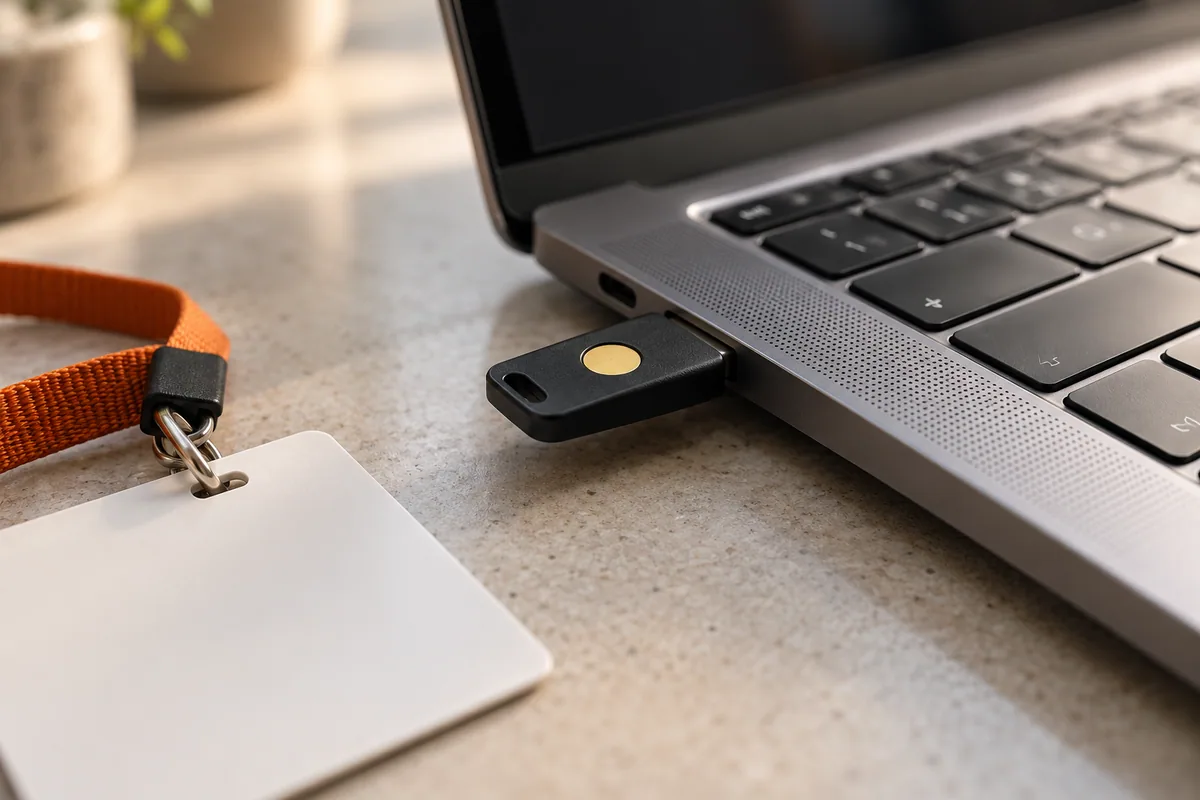
MFA methods are not equivalent. Appropriately configured passkeys, FIDO2 security keys and Windows Hello for Business can provide phishing resistance. SMS codes, one-time codes and ordinary push approvals should not be described as phishing-resistant.
Why the method matters
A fake sign-in page can attempt to capture passwords and some additional verification steps. Phishing-resistant methods bind authentication to the legitimate service in ways that help prevent credentials being reused through an impostor page.
Stronger authentication is still one control. Session theft, compromised devices, recovery processes and excessive access can create other routes to harm. Maintain device security, least privilege and monitoring alongside authentication.
Plan a rollout people can complete
Inventory the applications, devices and operating systems people use. Identify remote staff, shared devices, users without a suitable personal phone and workflows that rely on older authentication methods.
Pilot with representative users. Provide enrolment instructions, support and a defined recovery process. A security improvement that leaves staff locked out will invite unsafe workarounds.
Protect recovery and administration
Decide how a lost authenticator is replaced and how the service desk verifies the person requesting help. Avoid a weak recovery process undermining a stronger sign-in method.
Plan emergency access carefully, document its use and test the arrangement. Review privileged access separately from ordinary user access, and remove authentication methods that are no longer approved where appropriate.
What we establish with you
- Which methods are currently allowed, and for whom?
- Which applications still use weaker or legacy paths?
- How are enrolment and recovery verified?
- How are exceptions approved and reviewed?
- What evidence shows the policy is applied to the intended users?
Sources & further reading
Primary guidance checked 16 October 2026. Product features and guidance can change.